Why Does My Jaw Pop? Common Causes
You yawn in a meeting, take a bite of lunch, or start talking and there it is again – a click, pop, or crack at the jaw. If you have found yourself wondering, why does my jaw pop, you are not alone. Jaw popping is one of the most common signs of temporomandibular joint dysfunction, but the reason behind it is not always the same from person to person. In our Sydney city clinic, 2 minute walk from Town Hall and 1 minute from Gadigal Station, located at 250 Pitt Street, we encounter clients and patients who describe their issues like the above.
Sometimes the noise is painless and occasional. That is because jaw disc does not have nerve supply. Sometimes it comes with tightness, ear symptoms, headaches, or pain when chewing. The key point is this: a popping jaw is not a diagnosis on its own. It is a clue, and the job is to work out what structure is involved, what is driving it, and whether it is likely to settle or continue to worsen.
Why does my jaw pop when I open or chew?
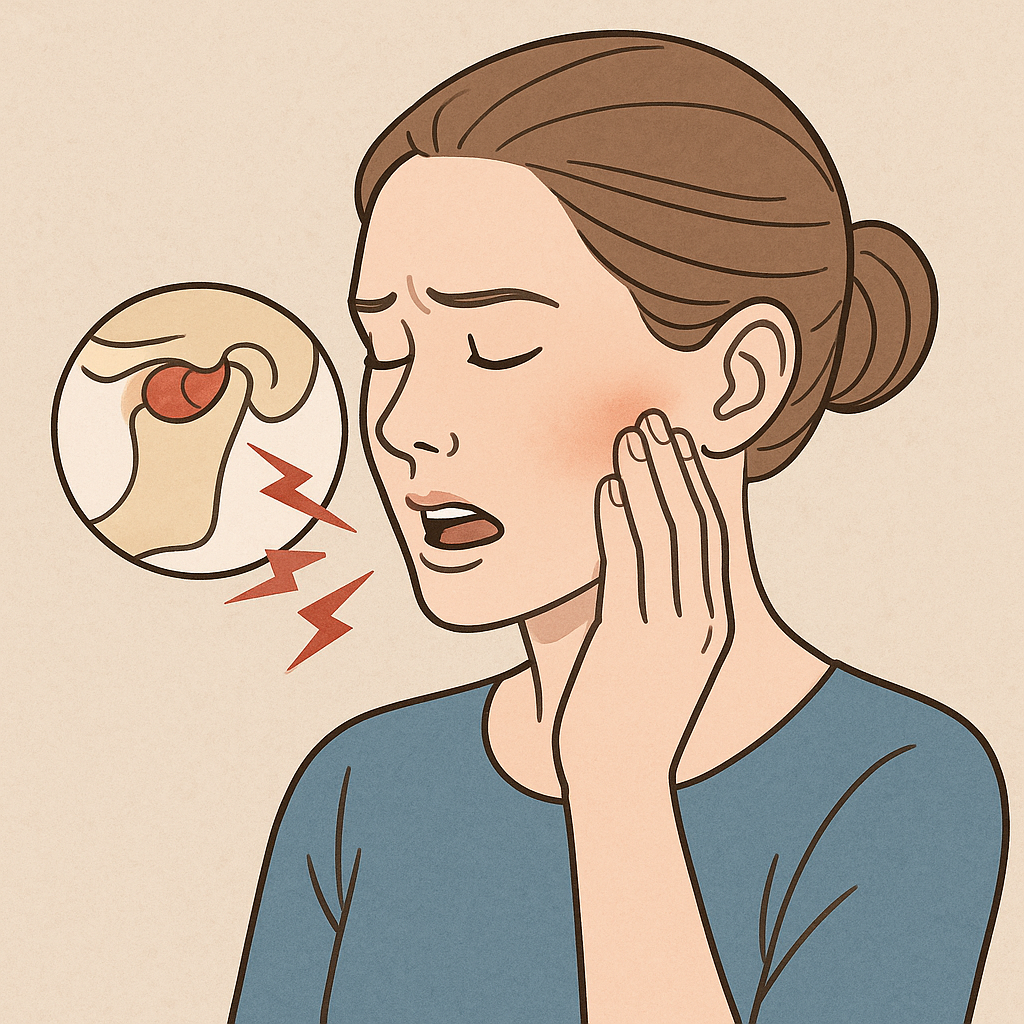
The jaw joint, also called the temporomandibular joint or TMJ, sits just in front of the ear. It is a complex joint that has to open, close, glide, and coordinate with muscles on both sides of the face and neck. Inside the joint is a small disc made of cartilage that helps the jaw move smoothly.
One of the most common reasons for a popping sound is that this disc is not moving as cleanly as it should. In many cases, the disc sits slightly out of position when the mouth is closed and then slips back into place as the mouth opens. That movement can create a clear click or pop. Some people notice it only once in a while, while others feel it every time they eat, yawn, or brush their teeth.
That said, the disc is not the only possible source. Jaw popping can also come from joint hypermobility, muscle tension changing how the jaw tracks, arthritic change within the joint, or altered mechanics after dental work, trauma, clenching, or prolonged mouth opening. This is why guessing based on the sound alone often leads nowhere.
Common causes of jaw popping
A displaced joint disc is high on the list, especially when the jaw clicks on opening and then again on closing. This pattern often means the disc is being recaptured during movement. It may stay at that stage for years, or it may progress if the joint remains irritated. One interesting case I remember is when a wife brought her husband in to see me after listening to his jaw click for 24 years. She has been too embarrassed to dine out because it was so loud and audible in public. It is very interesting how it can affect people’s lives in many ways.. Husband was oblivious to this fact because it never hurt him to talk or chew. It was certainly hurting his wife’s sense of freedom; to dine out! We got the click to become small enough so the wife was comfortable enough to dine out. It needed lots of exercises for her husband but with the wife being motivated, they worked as a team to get the husband’s jaw to become a lot quieter in public.
Clenching and grinding are also common contributors. Many adults under stress carry tension through the jaw without realising it, particularly during sleep or concentrated desk work. Constant loading through the joint can irritate the tissues and alter how the jaw moves.
Muscle tightness matters more than many people expect. If the muscles around the jaw, face, and neck are overactive or poorly coordinated, the joint can start to deviate or move unevenly. That can create strain and noise even when the joint itself is not badly damaged.
Hypermobility is another factor. Some people naturally have looser joints and are more likely to feel shifting, clunking, or catching at the jaw, especially at wide opening. Others develop popping after an episode of overload, such as biting into something hard, a sporting knock, or a long dental procedure. Joint shape can also be a cause where socket part of the jaw joint called articular eminence is shallow and it can make it susceptible for the disc to displace.
Arthritic or degenerative change can also produce noise. In this case the sound may be more of a crunching or grating than a sharp click, and it is more likely to be accompanied by stiffness, reduced opening, or discomfort that builds over time.
When jaw popping is harmless and when it is not
A jaw that pops occasionally without pain, locking, or difficulty chewing is not always a major problem. Some people have joint noise for years and never develop significant symptoms. Treatment is not always about chasing every sound. It is about function, irritation level, and risk of progression.
The picture changes when popping comes with pain in front of the ear, facial aching, headaches, locking, limited opening, or difficulty with meals. Those signs suggest the joint or surrounding muscles are under more strain. If the jaw sometimes gets stuck and then releases with a clunk, that deserves proper assessment.
Another sign to take seriously is a recent change. If your jaw has started popping after injury, dental treatment, increased clenching, or a stressful period with more headaches, it is worth having it checked. Changes in symptoms usually point to changes in joint loading or muscle behaviour.
Symptoms that often travel with a popping jaw
Jaw disorders rarely stay neatly in one spot. It is common for people with TMJ dysfunction to report headaches at the temples, tension through the cheeks, neck pain, tooth sensitivity without a dental cause, ear fullness, or pain around the ear. Some notice their bite feels off at times. Others wake with a tired jaw or morning headaches from overnight grinding.
This overlap is one reason jaw issues are often missed or confused with sinus, dental, or ear problems. The jaw, upper neck, and head share close mechanical and neurological connections. If one area is overloaded, another may start complaining.
For office workers and busy professionals, the pattern is often gradual. Long hours at a desk, stress, poor sleep, and unconscious clenching can all feed into a jaw problem that seems to appear out of nowhere. In reality, it usually builds over time.
Why does my jaw pop on one side only?
A one-sided pop often means the left and right joints are not moving in the same way. That can happen if one disc is displaced, one side is stiffer, or one set of muscles is working harder to guide the jaw. It can also happen after a previous injury or if your chewing habits are very one-sided.
One-sided symptoms are useful clinically, but they still do not tell the full story on their own. The jaw works as a pair of joints with a shared bone between them, so a problem felt on one side may be influenced by what is happening on the other side, as well as the neck and posture around it.
What assessment should look at
A thorough jaw assessment should not stop at, yes, it clicks. It should look at when the popping occurs, whether there is pain, whether the jaw deviates on opening, how wide you can open, whether the joint locks, and what your muscles are doing before, during, and after movement.
The neck should also be assessed, along with headache patterns, parafunctional habits such as clenching or nail biting, sleep quality, and any aggravating factors like gum chewing or prolonged speaking. In some cases, dental and bite factors are relevant. In others, they are less important than the muscle and joint behaviour.
This is where a targeted physiotherapy assessment can be valuable. At Metro Physiotherapy, the focus is on identifying the exact driver of the problem rather than treating all jaw clicking as if it were the same condition.
How treatment can help
The right treatment depends on the cause. If the issue is primarily muscle-driven, treatment may focus on reducing overactivity, improving jaw control, and unloading the joint. If the disc is involved, management may include careful movement retraining, hands-on treatment, advice around aggravating habits, and exercises to improve joint mechanics.
For some people, the biggest change comes from reducing clenching and modifying a few daily patterns. That might mean avoiding very wide opening, cutting back on hard or chewy foods for a period, improving workstation setup, and learning where jaw tension creeps in during the day. For others, the neck and upper cervical region are a major piece of the puzzle, especially if headaches are part of the picture.
There is no single exercise or generic splint that suits everyone. Some people improve quickly once the load on the joint is reduced. Others need a more structured plan over time, particularly if symptoms have been present for months or there is locking, pain, and restricted movement.
When to seek help for a popping jaw
If your jaw popping is new, painful, worsening, or linked with locking, headaches, ear symptoms, or trouble chewing, it is worth getting assessed early. The longer a joint stays irritated, the more compensation patterns tend to build around it.
That does not mean every click is urgent. It does mean that persistent symptoms deserve more than guesswork. A clear diagnosis can save a lot of frustration, especially if you have already tried rest, massage, or simply hoping it will pass.
Jaw popping can be a small annoyance, or it can be the first sign that the joint is not coping well with the load placed on it. If it keeps happening, your body is giving you useful information. Listening to it early often makes treatment simpler and recovery more straightforward.