


💤 Why You Clench or Grind Your Teeth – And How Nose Breathing Can Help
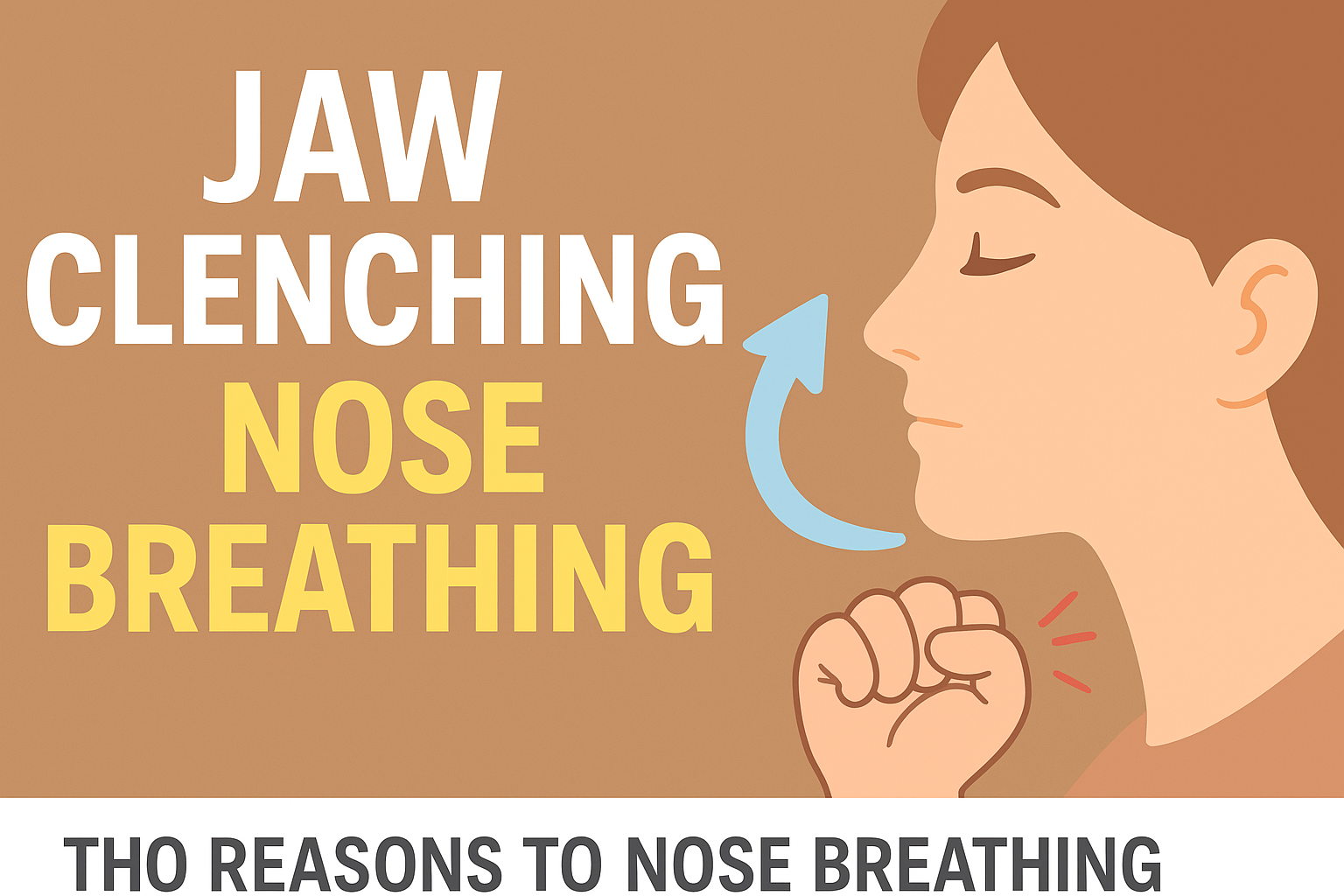
Have you ever wondered why you clench or grind your teeth, especially during sleep?
There are four main reasons why this happens:
-
Poor posture
-
Jaw joint problems
-
Breathing patterns
-
Reflux
In this article, we’ll focus on the third reason – your breathing pattern, particularly mouth breathing versus nose breathing.
🌬️ Mouth Breathing vs Nose Breathing
Ideally, we should breathe through the nose—it humidifies and filters the air, supports the jaw and tongue position, and promotes relaxation.
However, if you often wake up with a dry mouth, dry lips, or a dry tongue, you might be breathing through your mouth while you sleep.
Mouth breathing can lead to a condition called xerostomia (pronounced “zerostomia”), or chronic dry mouth, which can contribute to clenching and grinding during the night.
👅 How to Restore Nose Breathing
To retrain yourself to breathe through your nose, make sure these four key elements are aligned:
-
Tongue position:
The tongue should rest gently on the roof of the mouth, along the ridges just behind the upper front teeth (the alveolar ridges). -
Tooth position:
Your top and bottom teeth should be slightly apart, in what we call the “butterfly bite.” -
Lip position:
Keep your lips gently closed—not tight, just sealed. -
Breathing pattern:
Maintain steady nasal breathing through both nostrils.
👃 When Nose Breathing Feels Difficult
If nose breathing feels hard due to nasal blockage or sinus issues, it may be caused by inflammation or enlarged turbinates (the structures inside the nose that help with airflow).
In such cases, it’s worth consulting an Ear, Nose, and Throat (ENT) specialist to check if your nasal passages are obstructed.
💪 Improving Your Breathing and Jaw Health
When your posture, tongue, and lip function improve, and your nose is clear, your breathing pattern becomes more natural.
This can significantly reduce dry mouth, decrease clenching and grinding, and ultimately relieve jaw pain and other related symptoms.
Happy Rehab!
Cheers,
Metro Physiotherapy Channel
www.metrophysiotherapy.com.au
This information is general and for educational purposes only. Please seek a professional healthcare assessment and treatment for your individual condition.