


Headache & Migraine Treatment Sydney CBD
Headaches can be more than just a pain in your head. When they keep coming back, you may start worrying about when the next one will happen, how long it will last and whether you will be able to get through your day normally.
You may have tried painkillers, massage, stretching or other treatments without really understanding why your headaches keep returning.
At Metro Physiotherapy, we take the time to understand your headache pattern and identify the factors that may be contributing to your symptoms. This includes a detailed assessment of your neck, jaw and other relevant areas to determine whether physiotherapy is appropriate for you.
Tad Okutani has a particular interest and expertise in headaches, migraines and cervicogenic headaches, as well as jaw joint disorders. He uses the Watson Headache Approach as his primary approach to headache assessment and treatment.
Let us help you understand your headaches and develop a personalised treatment plan. Get an assessment and personalised treatment plan at our Sydney CBD physiotherapy clinic.
How Physiotherapy Can Help Headaches & Migraines
Physiotherapy can be helpful for some people with recurring headaches and migraines, particularly when there are neck, jaw or other musculoskeletal factors contributing to their symptoms.
The first step is not simply to treat the painful area. It is to understand your headache pattern, identify the factors that may be contributing to your symptoms and determine whether physiotherapy is appropriate for you.
Depending on your presentation, physiotherapy may help by:
- Assessing the upper cervical spine and neck movement
- Identifying relevant joint or muscle dysfunction
- Assessing jaw and TMJ function where appropriate
- Addressing neck or jaw muscle tension
- Improving movement and physical function
- Providing targeted exercises
- Addressing physical factors that may be aggravating your symptoms
- Teaching practical self-management strategies
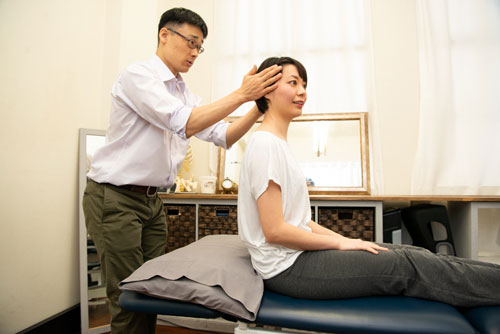
Treatment may include hands-on therapy, exercise, education and advice about movement or other factors that may be relevant to your symptoms.

When Should You See a Physiotherapist for Headaches?
You may benefit from a headache assessment if your headaches:
- Keep coming back
- Are affecting your work, sleep or everyday activities
- Are associated with neck pain or stiffness
- Seem to change with neck movement or position
- Occur alongside jaw pain, clenching or grinding
- Started after a neck injury or whiplash
- Are becoming more frequent or difficult to manage
- Only improve temporarily with massage or other treatments
- Are making you increasingly worried about when the next episode will happen
You do not need to wait until your headaches become unbearable before seeking help.
If you have been managing recurring headaches for months or years without really understanding what is contributing to them, a comprehensive assessment can be a useful place to start.
Not sure whether physiotherapy is right for you? That’s okay. The purpose of the assessment is to work that out.
What to Expect at Your Physio Appointment
We know that coming to a new physiotherapist can feel a little uncertain, particularly if you have been dealing with headaches for a long time.
At Metro Physiotherapy, your first appointment is about understanding the whole picture.
 We listen to your story
Your first appointment begins with a detailed discussion about your headaches. We will ask questions to understand your particular headache pattern, including where the pain starts and travels, what it feels like, how often it occurs, what triggers it and what makes it better or worse. We may also ask about neck pain, jaw tension, dizziness, nausea, light and sound sensitivity and other symptoms that may help build a clearer picture.
Don’t worry if you are not sure how to describe your headache. We can work through it together.
 We assess your physical function
Depending on your symptoms, we may assess:
- Neck movement
- Upper cervical function
- Muscle function and muscle imbalances
- Posture and movement
- Jaw and TMJ function
- Other areas that may be relevant to your presentation
 We explain what we find
We want you to understand what may be contributing to your symptoms.
We will explain things in plain English rather than filling your consultation with medical jargon.
 We set your treatment goals together
Your goals matter.
For some people, the goal may be reducing headache frequency. For others, it may be being able to work, exercise, sleep or spend time with family without worrying about another headache.
We will work with you to establish realistic goals for your treatment.
 We create a personalised treatment plan
Your treatment plan will be based on your symptoms, assessment findings and goals.
This may include hands-on treatment, exercises, education and practical changes to help you manage your symptoms.
 We give you things to do between appointments
Where appropriate, you may receive exercises or self-management strategies to continue at home.
We want you to become more confident in managing your condition rather than feeling that everything depends on your next appointment.
Let’s work through it together.
Headache Treatment in Sydney CBD
Conveniently Located Near Town Hall
Metro Physiotherapy is a boutique physiotherapy clinic in Sydney CBD. Located a few minutes’ walk from Town Hall Station, our clinic is convenient to reach by train and public transport from across Sydney.
Start with a comprehensive assessment and let us help you understand what’s contributing to your headaches. Call 0414 272 440 or book an appointment online.
You’ll find us at:
Metro Physiotherapy
Suite 406A, Level 4, 250 Pitt Street
Sydney NSW 2000
The Watson Headache Approach
 At Metro Physiotherapy, Tad uses the Watson Headache Approach as his primary approach to assessing and treating headaches and migraines.
The approach is based on the relationship between the upper neck and the brain’s processing of pain. When headache symptoms have been present for a long time, the nervous system can become more sensitive to incoming signals. We refer to this as a sensitised brainstem, where repeated or sustained pain signals can make the brainstem more responsive to information coming from the neck and other areas.
The Watson approach looks closely at whether the upper cervical spine is contributing to your familiar headache symptoms. Rather than simply treating a tight neck or assuming that every headache comes from the neck, the assessment uses specific clinical testing to determine whether treating the upper cervical region changes the headache you recognise.
This is particularly important because headaches can have different causes and presentations. The aim is to understand what is contributing to your symptoms and, where appropriate, use targeted physiotherapy to reduce the sensitivity and dysfunction contributing to your headaches.
Our initial assessment will include questions about your headache history, such as where your pain starts and travels, what your headache feels like, how often it occurs, what brings it on, what makes it better or worse, and whether you experience symptoms such as neck pain, jaw tension, dizziness, nausea or sensitivity to light and sound.
From there, we can assess the relevant areas, explain what we find and develop a personalised treatment plan based on your particular presentation.
The goal isn’t simply to give you another treatment for your headache. It’s to understand why your symptoms are happening and help you manage them with as little reliance on ongoing treatment as possible.

What Type of Headache Do You Have?
There are many different types of headaches, and your symptoms may not always fit neatly into one category. The International Classification of Headache Disorders, 3rd edition (ICHD-3), published by the International Headache Society (IHS), classifies headaches into 14 major classes, with more than 300 different types of headache and migraine described within the classification.
After seeing hundreds of people with persistent headaches, we know that no two people experience them in exactly the same way. The symptoms, severity, frequency and triggers can all be very different, even when two people have been diagnosed with the same type of headache.
Some of the more common headache types and presentations we see include:
Tension headaches
Tension-type headaches are commonly described as a feeling of pressure, tightness or heaviness around the head. You may feel this across your forehead, around your temples or towards the back of your head and neck.
Neck and shoulder tension, prolonged postures, fatigue and other physical or lifestyle factors may contribute in some people.
Cervicogenic headaches
A cervicogenic headache is a headache associated with structures in the neck, particularly the upper cervical region. Pain may begin around the base of your skull or upper neck and then travel towards the back, side or front of your head.
It may be associated with neck stiffness or symptoms that change with certain neck movements or positions.
Cluster headaches
Cluster headaches are a less common but particularly severe type of headache. They typically cause intense pain on one side of the head, often around or behind one eye, and can occur in repeated attacks over a period of time.
Cluster headaches have different characteristics and treatment requirements from many other headache types. If your symptoms suggest cluster headache, appropriate medical assessment and management are important.
Migraine
Migraine is a neurological condition that can cause moderate to severe headache, often accompanied by symptoms such as nausea, vomiting or sensitivity to light and sound. Some people also experience an aura, which can include visual or other neurological symptoms.
Physiotherapy does not treat every aspect of migraine headache, and not every person with migraine will benefit from physiotherapy alone. However, when neck pain, jaw problems or other musculoskeletal factors are contributing to your symptoms, physiotherapy may form a useful part of your overall management.
Jaw-related headaches
Sometimes your jaw can be part of the reason you are experiencing headaches. This may be more likely if you also have jaw pain, clicking, clenching, teeth grinding or tightness around your cheeks and temples.
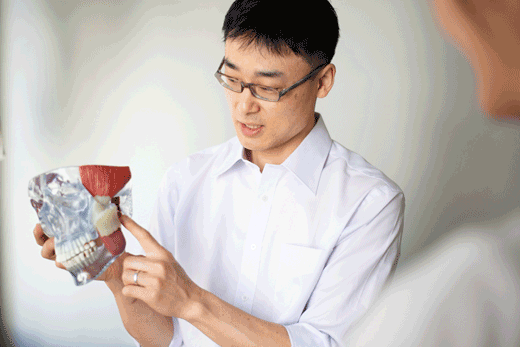
The muscles and joints around your jaw, face and neck work closely together, so problems in the jaw, such as TMJ dysfunction, bruxism or orofacial pain, can sometimes contribute to headache symptoms. If you have both jaw and headache symptoms, we can assess your jaw as part of your overall headache assessment rather than looking at your head and neck in isolation.
Post-traumatic headaches
Headaches can also occur following injuries such as whiplash, concussion or other trauma involving the head or neck. These headaches should be assessed carefully, particularly when symptoms are new or significantly different from your usual headaches
Your headache does not need to fit perfectly into one category. Many people have overlapping symptoms or more than one contributing factor. A detailed assessment helps us understand your particular presentation and determine whether physiotherapy is appropriate.
Common Headache & Migraine Symptoms
Headaches and migraines can feel very different from one person to another. Depending on the type of headache you experience, you may notice:
- Pain or pressure around your forehead or temples
- Pain around the back of your head or base of your skull
- Pain that spreads from your neck into your head
- One-sided or two-sided head pain
- Throbbing or pulsating pain
- Neck stiffness or restricted movement
- Tightness around your neck and shoulders
- Jaw pain, tightness or clenching
- Nausea or vomiting
- Sensitivity to light or sound
- Visual disturbances or aura
- Dizziness
- Headaches that become worse with particular movements or positions
- Headaches associated with your menstrual cycle
- Headaches that occur after prolonged desk or computer work
Your symptoms can provide important clues about what may be contributing to your headaches.
At your initial appointment, we will take the time to understand not only where your pain is, but how it behaves, what triggers it and what makes it better or worse.

What Causes Headaches and Migraines?
There is rarely one simple answer to why someone experiences recurring headaches.
Different headache disorders have different mechanisms, and individual factors can also influence how frequently symptoms occur and how severe they become.
Some factors that may contribute to headaches include:
- Dysfunction or irritation in the upper cervical spine
- Neck stiffness or restricted movement
- Muscle tension
- Prolonged or sustained postures
- Previous neck injury or whiplash
- Jaw clenching or teeth grinding
- Temporomandibular joint problems
- Poor sleep or fatigue
- Stress
- Hormonal changes
- Environmental or sensory triggers
- Other factors specific to migraine
This is why we do not believe in treating every headache in exactly the same way.
Not every headache is caused by the neck, and not every headache should be treated with physiotherapy. Our first step is to understand your symptoms and determine whether there is a physical or musculoskeletal component that we can appropriately address.
If your presentation suggests that you need medical investigation or another type of care, we will tell you.
When To See a Doctor Instead
Physiotherapy is not appropriate for every headache. Seek urgent medical attention if you experience a headache that is:
- Sudden and extremely severe
- Significantly different from your usual headaches
- Associated with new neurological symptoms
- Associated with loss of consciousness, confusion or significant weakness
- Accompanied by fever and significant neck stiffness
- Following a significant head injury
- Rapidly worsening or otherwise concerning
You should also seek medical advice if you are experiencing a new or unexplained pattern of headaches, particularly if you have other symptoms that concern you.
If we believe your symptoms need medical investigation, we will tell you. Our priority is making sure you receive the right care, whether that is physiotherapy or another form of medical assessment.
Why Choose Metro Physiotherapy for Headache Treatment?
When you have been dealing with headaches for a long time, it can be frustrating to keep trying different treatments without really understanding what is contributing to your symptoms.
At Metro Physiotherapy, we take the time to listen to your experience, assess your symptoms carefully and develop a treatment plan based on what we find. Our approach includes:
- Specialised headache experience: Our lead physiotherapist, Tad Okutani, has a particular interest in headaches, migraines and cervicogenic headaches, with specialised training in the Watson Headache Approach.
- Expertise in jaw and neck problems: Tad also specialises in jaw physiotherapy and temporomandibular joint disorders. This is particularly useful when headaches occur alongside jaw pain, clenching, teeth grinding or neck symptoms.
- One-on-one continuity of care: Metro is a small boutique clinic, so you will see Tad throughout your treatment. He gets to know your history, your symptoms and your goals, so you don’t have to keep explaining your story to different practitioners.
- Clear explanations: We want you to understand what may be contributing to your headaches and why we recommend a particular treatment. Tad explains his assessment findings and treatment in plain English so you can take an active role in your recovery.
- Personalised treatment: Your headache is unique to you, so your treatment should be too. We combine assessment, hands-on treatment, exercise and education according to your individual presentation and goals.
- A warm and professional approach: We take your treatment seriously, but we also want you to feel comfortable throughout the process. As Tad says, “I listen to you. We set your goal together. I walk throughout your treatment journey with you.”
Let us help you understand your headaches and work towards a treatment plan that is right for you.
Ready to Understand Your Headaches?
If headaches or migraines are getting in the way of your work, sleep, exercise or simply enjoying your day, let’s start by understanding what is happening.
Book a comprehensive headache assessment with Metro Physiotherapy in Sydney CBD.
We will listen to your story, assess the factors that may be contributing to your symptoms and work with you to create a personalised treatment plan.
We love to help you.

Frequently Asked Questions
Can physiotherapy help with migraines?
Physiotherapy may be helpful for some people with migraine, particularly when there are associated neck, jaw or other musculoskeletal factors. It is not a cure for migraine and should not replace medical management where that is required.
A thorough assessment can help determine whether physiotherapy is likely to be useful as part of your overall migraine management.
How do I know if my headache is coming from my neck?
Neck-related headaches may be associated with neck stiffness, restricted movement, pain around the base of the skull or headaches that change with certain neck movements or positions.
However, symptoms can overlap between different types of headaches. A proper assessment is more useful than trying to diagnose the source yourself.
What is the Watson Headache Approach?
The Watson Headache Approach is a specialised physiotherapy approach developed by Australian physiotherapist Dean Watson. It focuses on assessing whether the upper cervical spine is contributing to a person’s familiar headache symptoms.
At Metro Physiotherapy, Tad uses this as his primary approach to headache assessment and treatment.
Can jaw problems cause headaches?
Jaw problems, clenching and teeth grinding can be associated with headaches in some people. The muscles and structures around the jaw, temples and neck can all contribute to pain.
Because Tad specialises in both jaw disorders and headaches, the jaw can be assessed when it appears relevant to your symptoms.
Do I need a referral to see a headache physiotherapist?
In most cases, you do not need a GP referral to see a physiotherapist in Australia.
However, there may be different requirements if you are attending under a specific health scheme, compensation claim or referral pathway. If you are unsure, contact us before your appointment.
What happens during a headache physiotherapy assessment?
Your first appointment includes a detailed discussion about your headaches followed by a physical assessment of relevant areas such as your neck and, where appropriate, your jaw.
We will then explain our findings, discuss whether physiotherapy is appropriate and develop a treatment plan based on your symptoms and goals.
How many physiotherapy sessions will I need?
This depends on your headache type, how long you have had your symptoms, your assessment findings and how you respond to treatment.
We do not believe in prescribing an arbitrary number of sessions before assessing you. Your treatment plan will be reviewed as you progress, and we will work with you towards your individual goals.