


🦷 What Is TMJ Disorder? — A Physiotherapy Perspective —
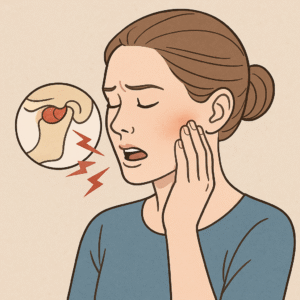
🦷 What Is TMJ Disorder?
— A Physiotherapy Perspective —
Your Jaw: One of the Most Active Joints
The temporomandibular joint (TMJ) is one of the most frequently used joints in the human body.
It is located just in front of the ears, and if you place your fingers in the small depression near your ear canal and open and close your mouth, you can feel the joint move beneath your fingertips.
The TMJ consists of the mandible (jawbone) and the temporal bone, supported by a joint capsule, an articular disc, ligaments, and muscles.
Hidden Strain on the Joint
Common symptoms of TMJ disorders include:
-
Pain when opening or closing the mouth
-
Clicking, popping, or grinding sounds in the jaw
-
Difficulty opening the mouth fully or moving the jaw easily
These symptoms often come and go, fluctuating over time.
Common contributing factors include:
-
Teeth grinding (bruxism) and jaw clenching
-
Speaking softly with limited jaw movement
-
Past trauma to the face, head, or mouth
-
Prolonged poor posture such as slouching
Grinding your teeth is similar to performing muscle training throughout the night, putting tremendous strain on the jaw, neck, and even causing headaches.
Displacement of the joint disc may lead to unconscious compensatory actions that further stress the joint, creating a vicious cycle of clenching and grinding.
Previous facial injuries may result in stiffness in the joint capsule or ligaments, limiting the jaw’s natural range of motion.
Poor posture, such as slouching, puts added pressure on the neck, shoulders, and jaw, exacerbating dysfunction when combined with other factors.
Addressing the Root Cause — The Joint Itself
GPs may prescribe medication, and dentists may fit mouthguards. However, if the underlying issue is within the joint itself, these approaches alone are unlikely to resolve the problem entirely.
At Metro Physiotherapy, our approach begins with a thorough assessment to identify the root cause.
Treatment may include:
-
Manual therapy to release tight jaw muscles
-
Stretching of the joint capsule and surrounding ligaments
-
Techniques to restore natural jaw mobility
To ensure lasting results, we also provide:
-
Customised home exercise programs
-
Guidance on posture correction and daily habits (e.g., avoiding slouching)
This article is intended for general informational purposes only and is not a substitute for professional diagnosis or treatment. Please consult a qualified healthcare provider if you experience TMJ-related symptoms.