


✅ 3 Habits to STOP Clenching Your Jaw!
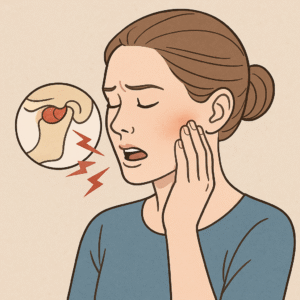
Table of Contents
- Introduction
- Habit 1: Tongue Position
- Habit 2: Posture Correction
- Habit 3: Stress Reset Technique
- Extra Tips
- Conclusion
- Clinic Information
Introduction
Daytime jaw clenching is one of the leading causes of TMJ pain, headaches, and shoulder tension. This article introduces three practical habits that can help you stop clenching, based on physiotherapy principles.
Habit 1: Correct Tongue Position
The foundation of a relaxed jaw
The most effective way to stop clenching is keeping the tip of your tongue on the “spot” — the small ridge right behind your upper front teeth.
With the tongue in place, your jaw muscles naturally relax and clenching becomes less likely.
Habit 2: Avoid Postures That Trigger Clenching
Forward head posture triggers clenching
Common triggers include:
– Looking down at your phone
– Leaning forward at your desk
– Pushing the chin forward unknowingly
Fix: Align your ears, shoulders, and hips. Take 5 slow breaths — this resets jaw muscle tension.
Habit 3: Stress Reset Technique
A simple reset for stressful moments
Under stress, people subconsciously clench their teeth. Use this reset:
1. Gently close your lips
2. Keep your teeth apart (most important!)
3. Place your tongue on the spot
4. Drop your shoulders once
This instantly reduces jaw tension.
Extra Tips
- Staying hydrated reduces subconscious clenching
- Avoid excessive chewing (gum, tough foods)
- If you bite your inner cheek, clenching is very likely involved
Conclusion
Jaw clenching is a habit—meaning it can be changed. Start with tongue position, posture, and a simple reset technique during stress. Consistency brings long-term improvement.
Clinic Information
| Clinic Name | Metro Physiotherapy and Injury Clinic(メトロ・フィジオセラピー) |
|---|---|
| Address | 406A 250 Pitt Street Sydney NSW 2000 |
| Hours | By appointment, Closed Sundays & Holidays |
| Phone | 0414 272 440 |
| info@metrophysiotherapy.com.au | |
| Web | https://metrophysiotherapy.com.au |