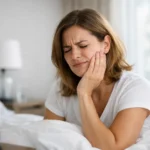
Best Treatment for Jaw Clenching
You wake with a tight jaw, a dull headache behind the eyes, and teeth that feel like they have done a night shift without you. If you are searching for the best treatment for jaw clenching, the first thing to know is this: there usually is not one single fix. The right treatment depends on why you are clenching, what tissues are irritated, and whether the problem is coming mainly from the jaw joint, the jaw muscles, sleep habits, stress, bite loading, or a mix of several factors.
Jaw clenching is common, but that does not make it harmless. Repeated overloading can irritate the temporomandibular joint, tighten the chewing muscles, trigger morning headaches, increase tooth wear, and make eating, talking or yawning uncomfortable. For some people it stays as muscle tension. For others it becomes a broader TMJ disorder with clicking, locking, neck pain or migraine overlap.
What is the best treatment for jaw clenching?
The best treatment for jaw clenching is accurate assessment followed by a personalised plan. That often includes education, hands-on treatment, jaw and neck exercises, habit retraining, and in some cases a dental splint or referral for sleep assessment. A generic approach can miss the real driver.
That matters because two people with the same symptom can need very different care. One may clench mainly during sleep and wake with heavy masseter tenderness. Another may be holding tension all day at a desk, with forward head posture, neck stiffness and frequent headaches. A third may have significant tooth grinding linked to obstructive sleep apnoea. If you treat all three the same way, results are usually patchy.
Why jaw clenching happens
Jaw clenching is not always caused by stress, even though stress can be a major contributor. In practice, it is often a combination of factors. Poor sleep, anxiety, concentration habits, stimulant use, certain medications (especially SSRIs), jaw injury, bite changes, upper airway issues and persistent neck tension can all play a part.
Daytime clenching is often a habit problem as much as a pain problem. Many people do it while driving, working on a computer, exercising, or concentrating. They are not aware of it until their teeth are touching and the jaw is already loaded.
Night-time clenching is less under voluntary control. It can be associated with sleep disturbance, breathing issues, arousal during sleep, or a sensitised nervous system. This is one reason a mouthguard is not always the whole answer. It may protect the teeth, but it does not necessarily reduce the underlying muscle activity.
The treatments that actually help
A good treatment plan is usually layered rather than one-dimensional. The aim is to reduce overload, calm irritation, restore normal movement and stop the cycle from rebuilding.
Physiotherapy for jaw clenching
For many people, physiotherapy is one of the most useful treatments because it addresses both symptoms and contributing factors. A targeted TMJ assessment looks at jaw opening, deviation, clicking, joint loading tolerance, muscle tenderness, neck function, headache patterns and aggravating habits.
Treatment may include manual therapy to the jaw, face and neck, guided exercises to improve jaw control, and strategies to reduce overactivity in the chewing muscles. If the neck is stiff or the upper cervical region is contributing to headaches, that needs to be treated as well. Jaw clenching rarely exists in isolation.
Just as important is education. Patients often improve when they learn what a relaxed jaw position feels like, how often their teeth should actually be apart, and which daily habits are silently keeping the problem going. This is where one-on-one care makes a difference. Small details matter.
Dental splints and mouthguards
Splints can be very helpful, but they are not a cure-all. Their main role is usually to protect teeth and sometimes reduce joint or muscle load. Some people feel better quickly with a well-made splint. Others notice little change in symptoms even though the teeth are being protected.
The trade-off is that splints work best when prescribed for the right reason. A poorly chosen device or a one-size-fits-all over-the-counter guard may be uncomfortable, encourage more clenching in some cases, or fail to address a more complex TMJ presentation. If your symptoms include locking, sharp joint pain, or changing bite sensation, it is worth having the jaw properly assessed rather than guessing.
Stress management and nervous system load
Stress is not an imaginary cause. It changes muscle tension, breathing, sleep quality and pain sensitivity. If your clenching ramps up during deadlines, conflict, or poor sleep, stress is part of the clinical picture.
That said, telling someone to simply relax is not treatment. Practical strategies tend to work better: reducing caffeine late in the day, improving sleep routine, setting reminders to check jaw tension during work, using nasal breathing where appropriate, and learning to notice the first signs of jaw gripping before it becomes prolonged. Sometimes psychological support is also appropriate, especially when anxiety and sleep disruption are major drivers.
Exercise and habit retraining
Jaw exercises are useful when they are specific. The goal is not to make an already overworked jaw stronger for the sake of it. The goal is to improve coordination, reduce guarding, and restore comfortable movement.
Simple drills may focus on controlled opening, tongue position, and keeping the jaw relaxed during daily tasks. For people who clench at a desk, posture and neck endurance can also matter. If your head and neck are held in a strained position all day, the jaw often follows.
Medication and injections
Some patients ask about muscle relaxants or Botox. These options can reduce symptoms in selected cases, but they are not always first-line treatment and they do not replace assessment. Botox may reduce muscle force temporarily, but it does not teach better jaw behaviour, fix a sleep issue, or restore joint mechanics. Medication may help settle acute pain, yet the longer-term plan still needs to address why the clenching started and what keeps it active.
When the best treatment for jaw clenching is not just about the jaw
This is the part many people miss. Jaw clenching can sit alongside headaches, migraines, ear symptoms, dizziness, neck pain and poor sleep. If you only chase the jaw soreness, you may miss the broader pattern.
For example, someone with recurrent morning headaches may assume the problem is purely dental. In reality, they may have a mix of night clenching, upper neck dysfunction and sleep disruption. Another person may present with jaw pain near the ear, but the dominant issue is a sensitised TMJ with limited joint tolerance rather than heavy muscle tension alone.
That is why assessment should look beyond the jaw itself. At Metro Physiotherapy, this is often where patients feel the difference between general advice and a focused plan built around their actual presentation.
Signs you should seek a proper assessment
If jaw clenching is occasional and mild, self-management may be enough. But if you have persistent pain, limited opening, locking, regular headaches, loud clicking, tooth damage, ear discomfort, or symptoms that keep returning, it is time to stop guessing.
The same applies if you have tried a mouthguard, massage or online exercises without lasting change. Lack of progress usually means the treatment was incomplete, the diagnosis was off, or an important driver was missed.
One client I had today sought after a reason for his long standing symptoms of 13 months. We have identified it as a possible issue with breathing in his sleep causing oxygen level to drop which triggers clenching as a reflex. Also discovered through physical assessment that the neck, shoulders and upper back range of motion are affected. Then after we have identified all these, and prescribed exercises to start rehabilitation, he wanted more exercises and when I said please focus on the prescribed exercises, he asked if he would be okay to go on line and ask AI to formulate his exercise program. This way of thinking where all the answers are online is like saying, “I only deserve a cookie cutter exercise program” and not a specific exercise program set up just for me… It is almost sabotaging the most efficient path to recovery with this type of thinking (i.e. internet knows everything kind of thinking). So it would be great to take a leap of faith and go all the way through the rehabilitation program when you seek help from a professional specific to your condition.
What to expect from a good treatment plan
A well-designed plan should feel clear. You should understand what structures are irritated, what is likely driving the clenching, what to avoid for now, and what you can actively do to improve and how long it takes to improve what percentage. Progress is often measured by less morning tension, fewer headaches, easier chewing, reduced tenderness and better jaw movement.
Recovery times vary. Mild, habit-driven clenching may improve relatively quickly once awareness and muscle load change. More persistent cases involving TMJ irritation, chronic headaches or long-standing night clenching usually take longer. That is normal. The aim is not a quick patch, but steady reduction in overload and a return to comfortable function.
If you are looking for the best treatment for jaw clenching, think less about finding a miracle fix and more about finding the right diagnosis. Once that is in place, the best treatment is usually a combination of targeted care, practical habit change and the kind of follow-through (the Process) that gives the jaw a real chance to settle. I am here to listen to your story. Please come it and get your assessment. I’m situated at 250 Pitt Street, Sydney 2000 near Gadigal Station exit (1 minute walk). See you soon.