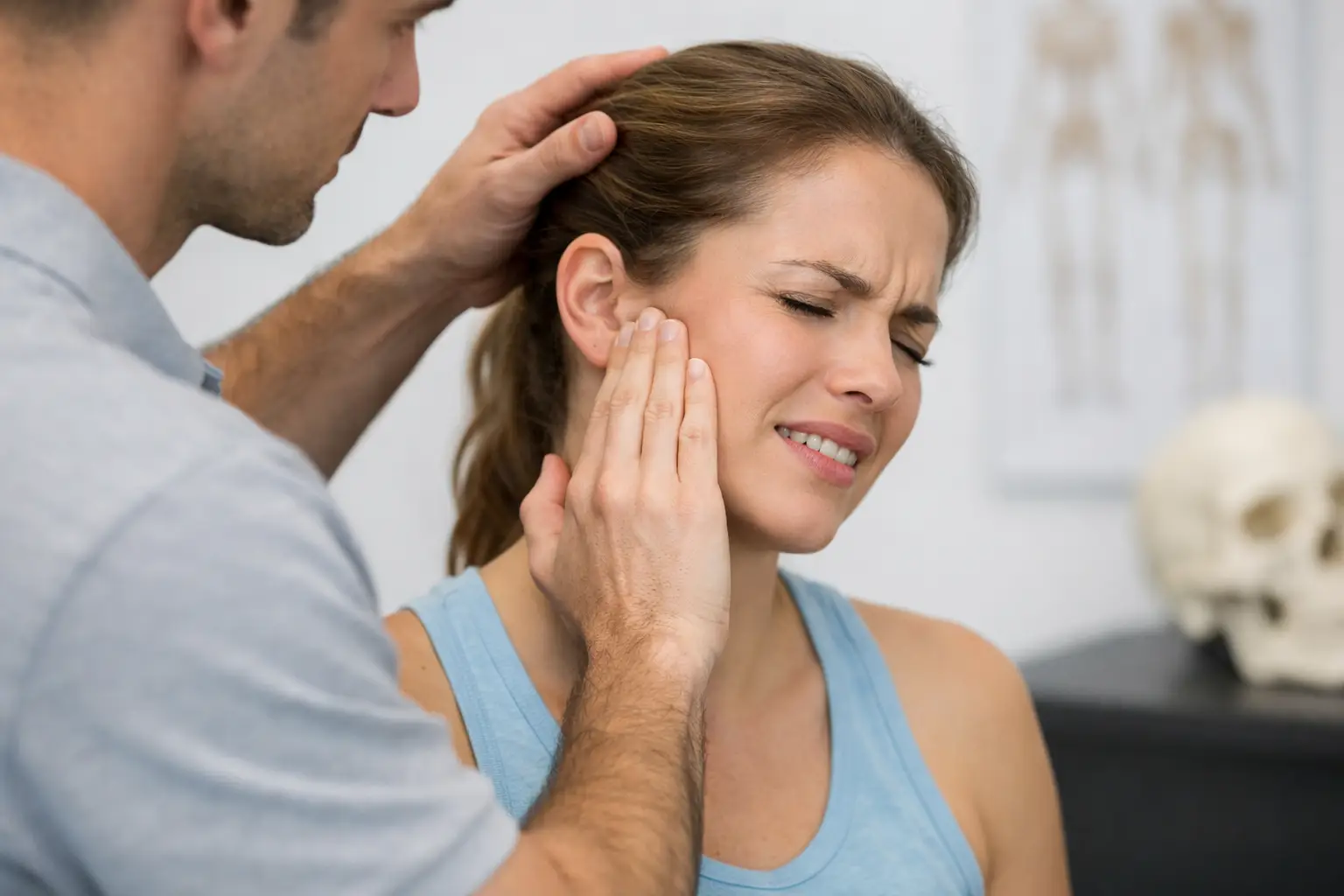
Can Physio Help TMJ Pain and Clicking?
That jaw click when you yawn in a morning meeting, the ache while chewing lunch, the headache that builds by 3 pm – these are often brushed off as stress or grinding. But if you are asking can physio help TMJ, the short answer is yes, in many cases it can. The better answer is that it depends on why your jaw is painful, tight, noisy or not moving well in the first place.
TMJ stands for temporomandibular joint – the joint just in front of your ear that helps you open, close and move your jaw. It works together with the jaw muscles, neck, tongue, teeth and surrounding nerves. When one part of that system is overloaded or not working as it should, symptoms can show up in ways that do not always seem obviously related to the jaw.
People often come in thinking they only have jaw pain, then mention they also wake with temple headaches, feel tight through the face, clench during work, or get ear fullness and neck pain. That overlap matters. TMJ disorders are rarely just about the joint alone. Jaw joint pain and tightness can be a result (symptoms) of some other deeper issues that is underlying and unaddressed without proper and thorough assessment by someone who deals with this daily.
Can physio help TMJ in a meaningful way?
Physiotherapy can help TMJ when the problem involves muscle tension, joint irritation, poor jaw movement, clenching patterns, neck involvement, or habits that keep overloading the area. It is particularly useful when symptoms are recurring and no one has properly assessed how the jaw, neck and surrounding muscles are working together.
Personally, people seek help from me and I go through worksheet to identify all factors that contribute to TMJ dysfunction. If factors that physiotherapy can not treat are identified, I have a network of contacts to refer on. This saves clients a lot of time, money and stress in not knowing what is happening to their jaw and body.
Good TMJ physiotherapy is not just a few jaw exercises handed over at the end of a session. It starts with accurate assessment. That means looking at how wide you open, whether the jaw deviates, whether clicking happens on opening or closing, how the chewing muscles feel, how the neck moves, and what your daily aggravating factors might be.
From there, treatment is tailored. One person may need hands-on treatment to settle irritated muscles and improve joint movement. Another may need help reducing clenching, restoring neck mobility, and changing the way they load the jaw during the day. If the diagnosis is off, treatment tends to miss the mark.
Why TMJ symptoms are often more complex than they look
A painful jaw can come from several different drivers. The joint itself may be inflamed or mechanically irritated. The disc inside the joint may not be moving smoothly. The muscles used for chewing may be overworked from clenching or grinding. The neck can also refer pain into the jaw and head, which is one reason TMJ issues and headaches so often travel together.
Stress also plays a role, but not in the vague, hand-wavy sense patients often hear. Under stress, many people increase jaw tension without noticing. They hold their teeth together while concentrating, push the tongue hard into the palate, or wake after a night of heavy clenching. Those behaviours can keep the system irritated even when scans look relatively unremarkable.
This is why one-size-fits-all advice can be frustrating. Some people are told to just relax their jaw. Others are given a splint without anyone checking the neck, chewing muscles or movement pattern. Sometimes that helps. Sometimes it only partially helps. And sometimes it leaves the main driver untouched.
What a physio actually does for TMJ
A physiotherapist with experience in jaw disorders will usually assess more than just the TMJ itself. They are looking at movement quality, muscle overactivity, joint sensitivity, posture, breathing pattern, neck function and aggravating habits. That broader view matters because the jaw does not work in isolation.
Treatment may include manual therapy to the jaw and surrounding muscles, gentle work inside the mouth if clinically indicated and with consent, treatment to the neck, and specific exercises to improve control and reduce overloading. Education is a major part of care as well. Patients often improve faster once they understand what is flaring the joint and what practical changes will actually make a difference.
That might mean reducing wide-mouth opening for a period, modifying chewy or tough foods during a flare, improving tongue and jaw resting position, or learning how to catch daytime clenching before it becomes constant. For some people, a simple change in how often they rest their chin on their hand at a desk can help reduce strain.
Can physio help TMJ if there is clicking?
Yes, but clicking needs context. A click can happen when the disc inside the joint is not moving as smoothly as it should, and in some cases the jaw can still function quite well despite the noise. After all, the jaw disc is not innervated. Which means there is no direct nerve attachment to the jaw disc and therefore its motion is not painful even in the presence of a big pop. If the pop or crack comes with pain, it means there is already some inflammation or other pathology is present and it usually is in the long standing case. Not every click needs treatment. If there is no pain, no locking, and no reduction in function, the goal may simply be monitoring and avoiding unnecessary provocation.
If clicking comes with pain, locking, catching, limited opening, or fear around eating and yawning, physiotherapy can be very helpful. Treatment may aim to improve movement quality, reduce muscle guarding, and settle the joint enough for it to move more comfortably. That said, not every click disappears completely. A good result is not always silence – sometimes it is a jaw that works normally and no longer hurts.
That distinction matters because chasing a perfectly quiet joint can lead people to overfocus on the sound rather than function. In practice, pain, locking and limited movement are usually the bigger priorities.
When physiotherapy is most likely to help
Jaw Physio tends to help most when symptoms are linked to muscular tension, clenching, jaw stiffness, headaches related to the jaw and neck, pain with chewing, reduced opening, or postural and movement contributors. It can also be useful after dental work, prolonged mouth opening, or periods of high stress where the jaw has become more reactive.
It may be less straightforward if there is significant trauma, inflammatory joint disease, infection, fracture, or a dental issue driving the pain. In those situations, physiotherapy may still play a role, but it should sit within the right diagnosis and, where needed, alongside input from a dentist, GP or specialist.
A good clinician should be clear about that. TMJ care works best when it is honest about scope. Not every jaw problem is a physio problem. But many are; as long as they are mechanical problem in nature, and many patients are relieved to finally have someone assess the region properly rather than treating it as a mystery.
The link between TMJ, headaches and neck pain
One of the most common patterns we see is jaw pain that is not just jaw pain. The temples are tight. The neck is stiff. Headaches are worse after computer work or on waking. Sometimes migraine is part of the picture as well, with the jaw and neck acting as aggravating factors.
This overlap is one reason targeted treatment can be so valuable. If you only treat the jaw and ignore the neck, progress may stall. If you only treat the headache and ignore clenching, the cycle often continues. A more complete assessment helps identify what is primary, what is secondary, and what needs to change first.
For busy professionals, this is often the difference between short-term relief and a more durable result. You want to know not just what hurts, but why it keeps returning.
What to expect from treatment
Most people want to know how long it will take. The honest answer is that it varies. A recent flare from clenching during a stressful few weeks may settle relatively quickly. Longstanding TMJ symptoms, especially when combined with headaches, neck pain, poor sleep or heavy bruxism, usually take longer and need a more staged plan.
Early treatment often focuses on calming the area down and improving movement. Once pain is less reactive, the focus shifts toward control, load tolerance and preventing recurrence. That progression matters. If you skip straight to exercises while the joint is highly irritated, symptoms can flare. If you stay only with passive treatment and never address habits or loading, the relief may not last.
Continuity also helps. Jaw disorders are nuanced, and small details in symptom behaviour can change the direction of care. Seeing one clinician consistently makes it easier to refine treatment over time.
When to seek help sooner
If your jaw is locking, you cannot open properly, chewing is becoming difficult, or pain is spreading into frequent headaches, it is worth getting assessed sooner rather than later. The same applies if symptoms have been recurring for months and generic advice has not changed much.
Persistent TMJ issues are not something you need to simply put up with. With the right assessment, physiotherapy can often reduce pain, improve movement and help you understand what is driving the problem. At a clinic such as Metro Physiotherapy, that process is built around careful diagnosis and One-On-One care rather than guesswork.
If your jaw has been asking for attention for a while, it is worth listening to it. The earlier you understand the pattern, the easier it is to start changing it. Come and visit me at 250 Pitt Street Sydney near Gadigal station exit (1 minute walk). See you soon.