Headache Physio Sydney for Lasting Relief
A headache that keeps returning can quietly take over your week. It changes how you work, sleep, exercise and concentrate, and if it has been happening for months, you may have already tried medication, massage or general treatment without getting a clear answer. That is often when people start searching for headache physio options that look beyond short-term relief and focus on why the headache is happening in the first place. We meet many people like the above every year at our clinic (Metro Physiotherapy and Injury Clinic) in Sydney near Town Hall at 250 Pitt Street at the corner of Pitt and Park Street where Gadigal Station is located.
Not every headache starts in the same place. Some are closely linked to the neck. Some are driven by jaw tension, clenching or temporomandibular joint dysfunction. Some sit alongside migraine, dizziness or sensitivity to movement. When those drivers are missed, treatment can feel hit-and-miss. A more accurate assessment changes that.
Why headache treatment needs precision
Headache is a broad label, not a diagnosis. Two people can both say they have headaches and have completely different patterns, triggers and underlying causes. One may have headaches building after long hours at a desk. Another may wake with pain around the temples from overnight clenching. Someone else may notice neck stiffness, light sensitivity and nausea that point towards a migraine presentation with musculoskeletal contributors.
This is where specialist physiotherapy can be valuable. Good headache care is not about assuming every headache is a neck problem, and it is not about treating the painful area in isolation. It starts with working out whether the cervical spine, jaw, muscles, posture, movement patterns or nervous system sensitivity are contributing. Sometimes the answer is straightforward. Sometimes it is a combination.
That distinction matters because treatment for cervicogenic headache, tension-type headache and headache associated with TMJ dysfunction can overlap, but they are not identical. If your symptoms are mainly being driven by jaw loading and night-time clenching, a neck-only program may help a little without fully resolving the issue. If your neck joints are stiff and aggravating referred pain into the head, generic stretching alone may not be enough.
What a headache physio in Sydney should assess
A proper headache assessment should feel detailed, not rushed. It should connect your symptoms to your day-to-day life and identify patterns that explain why the problem keeps returning.
Headache history and pattern
The first step is understanding the behaviour of your symptoms. Where does the pain start? Does it spread behind the eye, across the other side of the head, into the temple, or from the base of the skull? How often does it happen, how long does it last, and what makes it worse or better? Morning headaches, end-of-day headaches and exercise-related headaches can point in different directions.
Associated symptoms are just as important. Jaw clicking, facial tension, dizziness, nausea, visual sensitivity, becoming sensitive to particular smells, poor sleep and neck pain all help build the picture. A clinician should also ask about stress, workload, screen time, training load and previous injuries, because these often influence flare-ups.
Neck and jaw examination
For many patients, headache is not just a head issue. It is a neck and jaw issue as well. An assessment may include cervical joint movement, muscle tenderness, deep neck flexor control, upper neck mobility and whether certain positions reproduce your familiar headache.
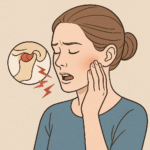
If jaw symptoms are part of the story, the temporomandibular joints and surrounding muscles should also be assessed. Clenching, grinding, restricted opening, jaw deviation and tenderness through the masseter or temporalis can all contribute to persistent headache patterns.
Posture, movement and aggravating loads
Posture is rarely the whole cause, but it can still matter. Long periods at a laptop, poor workstation setup, heavy upper trapezius loading and reduced movement through the day may all increase stress on the neck and jaw. The point is not to blame posture in a simplistic way. The point is to identify whether certain loads are repeatedly sensitising the same tissues.
When physiotherapy can help headaches
Physiotherapy is often helpful when headaches are linked to musculoskeletal factors, especially the neck and jaw. That includes cervicogenic headache, tension-type headache, some migraine presentations with neck involvement, and headaches associated with TMJ dysfunction. If you have never been to a physiotherapy, you may not even consider that neck and shoulder issues in their joints, nerves and muscles can trigger headaches called cervico-genic headache. Yes it is understandable because it is only in the last few years that International Headache Society (world’s peak authority on headache research, advocacy, treatment) officially included neck and shoulder related headaches to be treated by Physiotherapy care. In other words, the pinnacle of headache care and the official announcement took till only a few years ago to include physiotherapy as a part of the world’s best minds in all things headaches. We have been treating headaches successfully for many decades!!
It can also help when the problem is persistence rather than intensity alone. If your scans are clear, your symptoms keep coming back, and you know there are physical triggers but have not had a targeted assessment, physiotherapy may fill the gap between symptom management and a more lasting plan.
That said, not every headache should be treated as a physiotherapy problem. Sudden severe headaches, unexplained neurological symptoms, headaches with fever, new headaches after trauma, or significant change in pattern need medical review. Good care includes knowing when physiotherapy is appropriate and when further investigation is necessary.
Headache physio Sydney treatment that targets the cause
Once the likely drivers are identified, treatment should be specific. A one-size-fits-all approach usually falls short, particularly for patients who have already tried general therapy.
Hands-on treatment may be used to reduce stiffness and sensitivity in the upper cervical spine, relax overactive muscles, improve joint movement and settle related jaw tension. This can be useful, but it works best as part of a broader plan rather than as a stand-alone fix. We are specifically trained in using headache specific techniques including Watson Technique. We also use other world-renowed methods such as Maitland, McKenzie, Mulligans methods in addition to rehabilitation exercises to consolidate the improvements you gain through the abovementioned techniques to treat your symptoms.
Exercise also matters. That does not always mean a long gym program. For headache patients, it is often about improving neck control, restoring movement, reducing overload through the jaw and upper shoulders, and building better tolerance to the positions or tasks that currently trigger symptoms. Sometimes the right exercise plan looks surprisingly simple, especially early on.
Education is another major part of treatment. Patients often feel more confident once they understand whether their symptoms are being driven by clenching, neck loading, reduced sleep quality, desk setup, training habits or a mix of factors. Clear explanation helps people make the small day-to-day changes that protect long-term progress.
At a specialist clinic such as Metro Physiotherapy, that process is centred on accurate assessment, one-on-one care and treatment continuity with the same clinician. For people who are tired of repeating their history or receiving generic advice, that consistency can make a real difference.
Headaches, migraines and jaw tension often overlap
One of the most overlooked issues in headache care is overlap. A patient may have migraine, but also have significant neck stiffness and jaw clenching that increase attack frequency or intensity. Another may think they only have tension headaches, yet also report dizziness and TMJ symptoms that need to be considered together.
This is why labels alone are not enough. The practical question is what is modifiable. If reducing jaw tension lowers morning headaches, that matters. If improving upper neck mobility decreases the frequency of referred pain into the temple, that matters too. Treatment should focus on what can be assessed, changed and measured over time.
There is also a trade-off here. Some patients want a quick hands-on release because it gives immediate relief. That can be useful, but if the underlying loading pattern is not addressed, symptoms often return. Others want only exercises, but if pain is too irritable, manual therapy may be the piece that allows exercise to work. The best approach usually combines both, in the right order.
What patients can expect from specialist care
A thoughtful headache physiotherapy plan should not feel vague. You should come away understanding the likely source of your symptoms, what treatment is aiming to change, and how progress will be tracked.
Early treatment often aims to reduce pain frequency or intensity, settle irritability and identify major triggers. As symptoms improve, the focus usually shifts towards resilience – improving neck and jaw function, increasing load tolerance and reducing the chance of the same pattern returning during busy work periods or stressful weeks.
The timeline depends on the presentation. A relatively recent cervicogenic headache may respond quickly. A long history of migraine with jaw clenching, poor sleep and persistent neck tension can take longer. What matters is that treatment matches the complexity of the case, rather than promising a shortcut that may not exist.
Choosing the right headache physio Sydney provider
If you are comparing options, look for a clinician who regularly treats headaches, migraine-related presentations, TMJ dysfunction and dizziness rather than only general neck pain. Ask whether the assessment includes both neck and jaw where relevant, whether treatment is ONE-on-One with attention 100% dedicated to you only, and whether you will see the same practitioner across your care.
For many Sydney patients, especially professionals working long hours in the CBD, convenience matters. But expertise matters more when the problem has been stubborn. Persistent headaches usually need more than a standard neck rub and a sheet of generic stretches.
The right care should feel personalised, evidence-based and grounded in a clear diagnosis. It should also feel collaborative. You should be listened to, not funnelled through a routine.
If headaches have been interrupting your work, sleep or quality of life, the next step is not guessing harder. It is getting a more accurate assessment so treatment can finally match the problem.