Best Sleeping Position TMJ Pain Relief
You wake up with a tight jaw, a headache behind the eyes, and teeth and gum that feel like they have been working all night. For many people with TMJ dysfunction, sleep should be recovery time, but the wrong posture can quietly add hours of strain. Finding the best sleeping position TMJ sufferers can tolerate is often a simple but meaningful part of reducing morning pain.
TMJ symptoms rarely come from one cause alone. Clenching, grinding, neck tension, stress, airway issues such as sinus problem like deviated septum/chronically inflamed inferior turbinates, pillow height, shoulder position and daytime posture can all feed into what happens overnight. That is why there is no single perfect answer for everyone, but there are patterns that tend to help far more than others. Our clinic located at 250 Pitt Street near Gadigal Station, we have special interest in helping Sydney siders who suffer from TMJ / jaw pain and dysfunction.
What is the best sleeping position for TMJ?
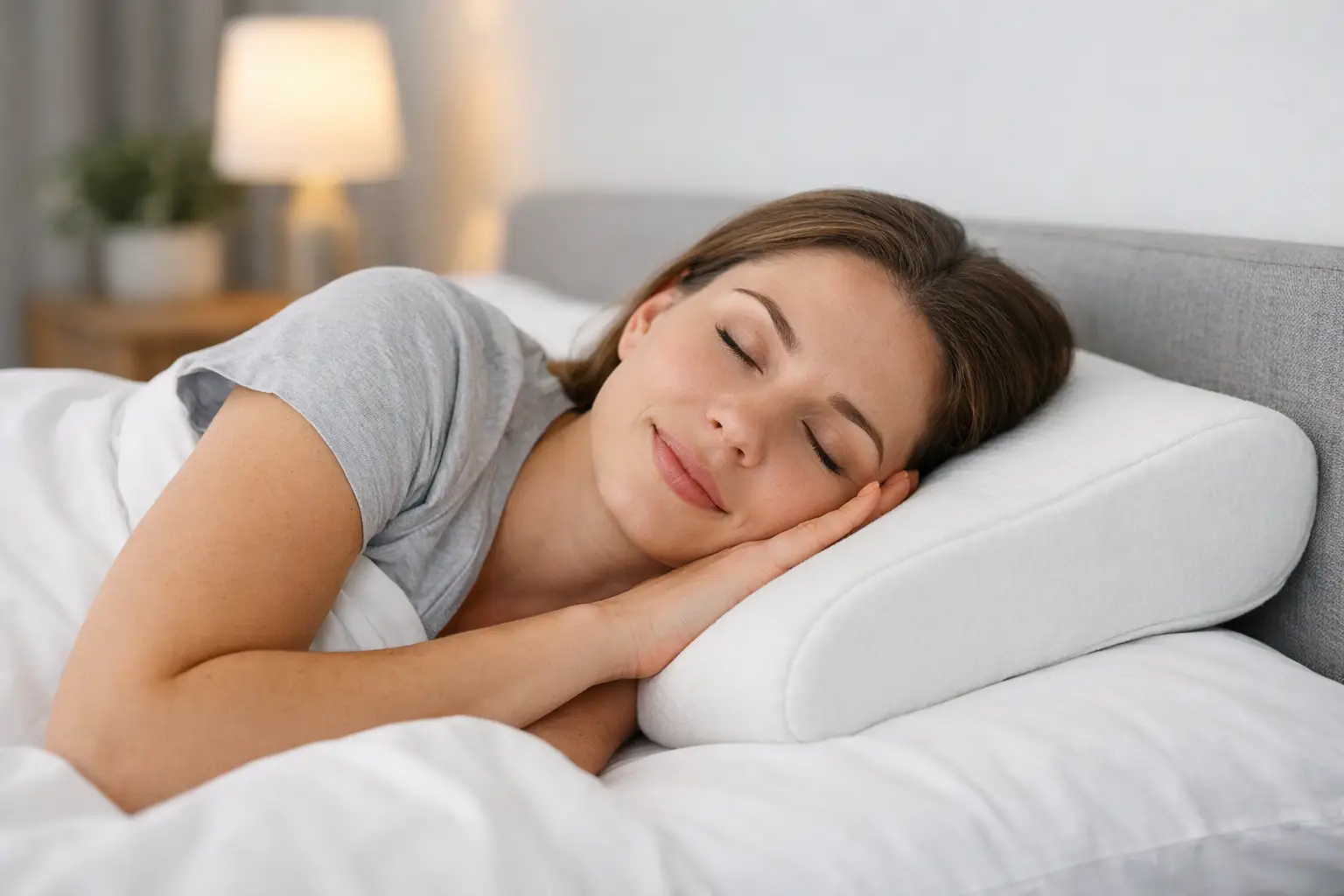
For most people, sleeping on your back is the best sleeping position for TMJ. It usually places the jaw, neck and shoulders under the least amount of mechanical stress, especially when the head is supported in a neutral position. Back sleeping also reduces direct pressure on the jaw joint and surrounding muscles, which is often a problem in side sleeping and almost always an issue in stomach sleeping.
That said, back sleeping is not automatically comfortable or realistic for everyone. Some people snore more on their back, some feel stiff in that position, and others simply cannot stay there through the night. If back sleeping does not suit you, side sleeping can still work well with a few adjustments. After all, we are meant to turn between 24-48 times in a night of sleep.
Why sleep position affects TMJ pain
The jaw does not work in isolation. The temporomandibular joint is closely influenced by the muscles of the face, neck and upper shoulders. If your sleep position twists the neck, pushes the jaw sideways, or loads one side of the face into the pillow for hours, those tissues can become irritated by morning.
People with TMJ dysfunction often describe waking with jaw stiffness, clicking, ear discomfort, temple pain or tension headaches. In many cases, the overnight position has either increased joint compression or encouraged muscle overactivity. This is particularly common if you already clench or grind in your sleep.
Even a small amount of asymmetrical pressure can matter when it is repeated night after night. A pillow that is too high can push the head forward or sideways. Sleeping with your hand under your face can shift the jaw. Curling tightly on one side can also increase neck tension, which may then refer pain into the jaw and head.
Back sleeping: usually the best option
If your goal is to calm an irritated jaw, back sleeping is the position most clinicians tend to favour. It allows the head to rest more evenly, reduces pressure through one side of the jaw, and usually makes it easier to keep the neck in a neutral alignment.
The key detail is pillow height. If the pillow is too large and thick, the head tips forward and the upper neck can stiffen. If it is too flat, the head may fall back and feel unsupported. In both cases, the jaw muscles can become more active. A medium-height pillow that supports the natural curve of your neck without forcing the chin towards the chest is often the best starting point.
Some patients also do well with a small towel roll under the neck for extra support. This can reduce the tendency to poke the chin forward, which is a common posture in people who already spend long hours at a desk. Also I often advise the patients to fold bath towel into the thickness of their liking (relatively flat) and put it in the pillow case if the pillow feels too thin and unsupported especially for sleeping on their sides.
If you clench heavily, it may also help to place one hand lightly over the lower ribs or abdomen as you settle to sleep. That sounds unrelated, but it can encourage slower breathing and reduce overall body tension, which sometimes helps the jaw relax as well.
Side sleeping and TMJ: possible, but it depends
Side sleeping is not always bad for TMJ, but it is more position-sensitive. The main issue is compression. When you sleep on your side, the pillow and mattress can push into the lower side of the face and jaw for several hours. That may aggravate joint pain, trigger muscle guarding, or worsen clicking in people who are already irritated.
Still, many adults simply sleep better on their side. If that is you, the aim is not to force a perfect position but to reduce unnecessary load. A supportive pillow should fill the space between your head and shoulder so the neck stays level rather than bending down towards the mattress. A pillow that is too low often leads to side-bending through the neck, which can increase both neck and jaw symptoms. Folded bath towel in the pillow case will help with this case also.
It also helps to avoid sleeping directly on your hand or forearm, as this can push the jaw sideways. Try keeping the face centred and the jaw relaxed rather than tucked into the chest. A pillow between the knees can also reduce trunk rotation, which sometimes improves overall spinal alignment and makes the upper body feel less twisted.
If one side of your TMJ is clearly more painful, avoid sleeping on that side where possible. It is not a cure, but reducing nightly compression can make a noticeable difference.
Stomach sleeping: usually the worst choice
If you have persistent jaw pain, stomach sleeping is usually the least helpful option. It commonly forces the neck into sustained rotation and extension, and that combination can drive tension into the upper cervical spine, jaw muscles and head. On top of that, your face often presses into the pillow, which can place uneven force through the jaw.
Many people who sleep on their stomach also tend to breathe through the mouth more easily in that position. For some, that can contribute to dry mouth, poor tongue posture and increased clenching. Not everyone will experience those issues, but stomach sleeping gives you fewer biomechanical advantages if TMJ pain is already a problem.
If you are a committed stomach sleeper, changing habits overnight can be hard. A gradual approach usually works better than trying to force a complete switch in one night.
How to improve your sleep setup for TMJ
The best sleeping position TMJ management relies on is only part of the picture. Your pillow, mattress, neck posture and pre-sleep habits all matter.
Start with your pillow. It should support your head without tipping it too far forward or sideways. Very high pillows, stacked pillows and overly soft pillows can all create poor neck positioning. If you sleep on your side, the pillow generally needs more height than it does for back sleeping.
Next, consider what your jaw is doing as you fall asleep. A relaxed jaw usually means lips together, teeth apart and the tongue resting gently on the roof of the mouth. Many people with TMJ pain unconsciously go to bed with the teeth touching and the facial muscles switched on. That low-level tension can carry into sleep.
Heat over the jaw or upper neck for 10 to 15 minutes before bed may help settle tight muscles. Gentle breathing work can also help if stress and clenching are part of the pattern. The goal is not to chase perfection. It is to give the jaw less to fight against overnight.
When the problem is not just your sleep position
Sometimes a better pillow and a better position help immediately. Sometimes they help only a little. That does not mean you are doing it wrong. It may mean your TMJ symptoms are being driven by more than posture alone.
Jaw pain can be linked with disc irritation, joint inflammation, muscle overactivity, headaches, bruxism, cervical dysfunction and even dizziness in some cases. If you regularly wake with significant pain, clicking that is worsening, jaw locking, ear symptoms or repeated morning headaches, it is worth having the area properly assessed.
This is where a more targeted approach matters. A thorough physiotherapy assessment should look not only at the jaw but also at the neck, muscle tension patterns, bite-related habits, sleep posture and the way your symptoms behave across the day. At Metro Physiotherapy, this kind of One-on-One assessment helps identify whether your sleep position is a major driver, a minor contributor, or simply one piece of a bigger picture.
Small changes that often help most
The biggest gains usually come from practical adjustments you can repeat every night. Sleep on your back if comfortable, or on your side with good pillow support. Avoid stomach sleeping where possible. Do not sleep with your hand pressing into your jaw. Keep the neck neutral. Let the teeth stay apart as you drift off.
If you use a splint or night guard prescribed by your dentist, continue following that advice, but remember it may protect the teeth more than it changes the underlying muscle and joint mechanics. If symptoms are persisting, the answer often sits in the combination of treatment, habit change and better positioning rather than in one single device.
A sore jaw in the morning is easy to dismiss as something you just have to put up with. Usually, you do not. The right sleep position will not fix every TMJ problem, but it can reduce a steady source of overnight irritation and give your jaw a quieter place to recover.