TMJ Symptoms Explained Clearly For Sydney Siders
A jaw that clicks when you chew, a headache or a pressure that builds behind the eyes, or morning tension around the temples can seem like separate problems. In many cases, they are connected. TMJ symptoms explained properly means looking beyond the jaw itself and understanding how the joint, muscles, teeth, neck and nervous system can all contribute. After all, 50% of jaw joint is made from temporal bone (a part of the bones that form skull) and the other 50% is from mandible (lower jaw bone). So if the head is positioned in poor position, particularly in head forward posture, the temporal bone is also in a poor position. That automatically makes the jaw joint to be already in a poor functioning position. That is why posture means a lot. In fact, 50% of jaw posture is to do with Head POSTURE. At Metro Physiotherapy located at 250 Pitt Street near Gadigal Station, we meet hundreds of city workers year after year with this same issues. Maybe more in the recent decade since the smartphone became the new go to device in addition to the laptop and the tablets and tablet computers. For Physios who think mechanically, it means we are possibly spending more time in a sustained and head forward posture or looking down.
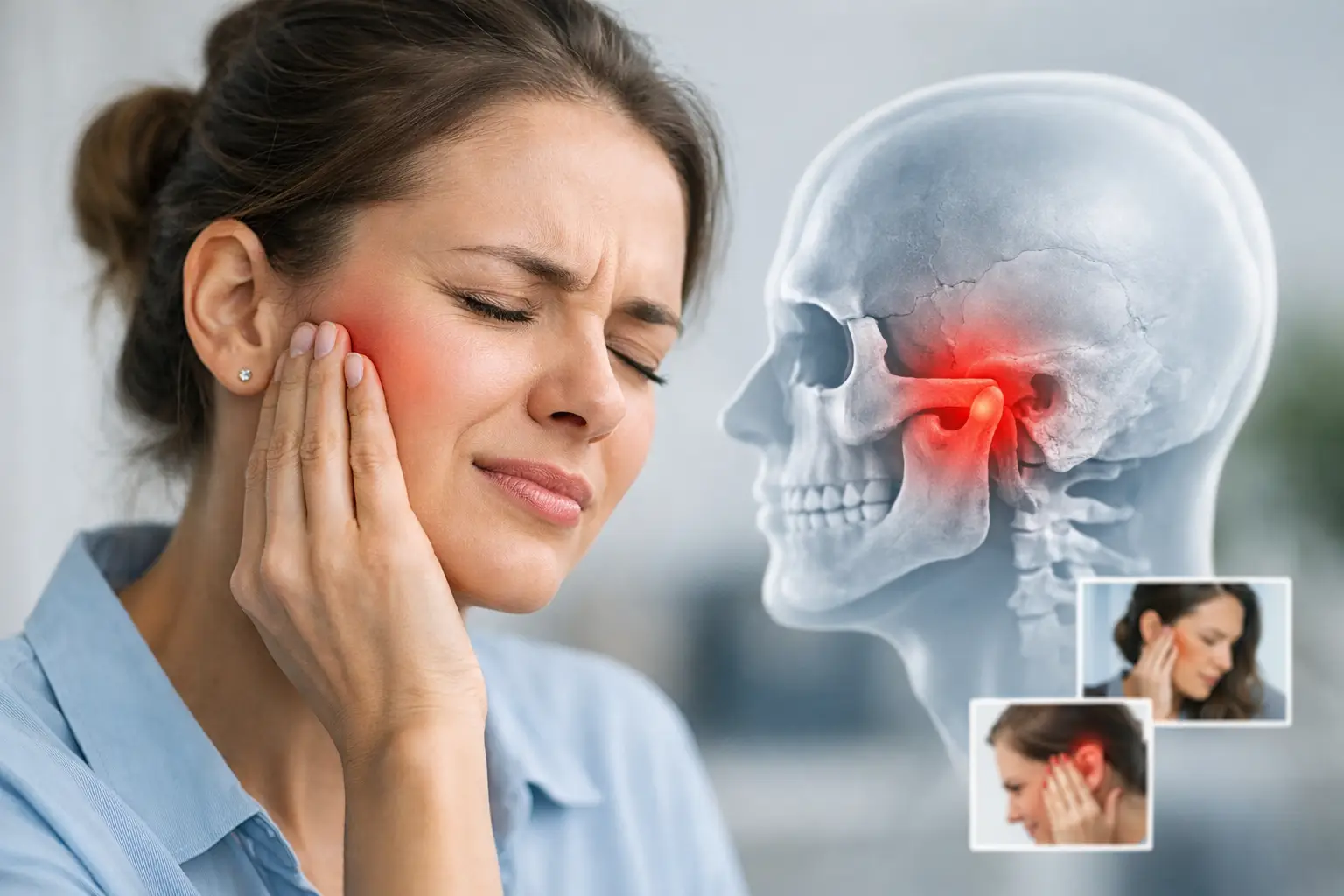
The temporomandibular joint, or TMJ, is the joint that connects your jaw to your skull. You have one on each side, just in front of the ears. These joints work with a disc, ligaments and 10 muscles including 8 powerful muscles (4 pairs) to help you talk, chew, yawn and swallow. When that system is overloaded, irritated or poorly coordinated, symptoms can show up in ways that are not always obvious.
TMJ symptoms explained: what people usually notice first
For some people, the first sign is jaw pain. For others, it is a click, clunk or grating sound when opening and closing. Many patients are surprised to learn that TMJ dysfunction can also present as headaches, facial pain, ear symptoms or difficulty chewing.
Pain around the jaw joint is common, but the pattern matters. It may feel localised just in front of the ear, or spread into the cheek, temple or lower face. Some people describe a dull ache that builds during the day, while others notice sharp pain when biting into something firm like a crusty roll or steak.
Clicking does not always mean there is serious damage. In some cases, it reflects a disc that moves slightly out of position and then returns during opening. If the jaw still opens fully and the clicking is painless, it may be more of a mechanical issue than an urgent one. But if the clicking is paired with pain, locking, or reduced movement, it deserves a proper assessment.
Restricted opening is another classic sign. You might notice you cannot open wide enough for a large bite, dental treatment feels difficult, or your jaw deviates to one side when opening. Locking can happen occasionally or more frequently, and it often feels unsettling because the jaw seems to catch or stop.
Muscle-related symptoms are also common. Tightness in the jaw, tenderness over the cheeks, fatigue while chewing, and clenching-related soreness on waking often point to overload in the muscles that control the jaw. This is especially relevant for people who grind or clench their teeth during sleep or under stress.
Symptoms that do not feel like a jaw problem
One reason TMJ disorders are often missed is that the symptoms can mimic other conditions. Headaches are a major example. Tension through the jaw muscles can refer pain into the temples, behind the eyes and across the forehead. Some people wake with a heavy, band-like headache and assume it is just stress, poor sleep or screen time.
Ear-related symptoms can also occur. Patients may report ear pain, pressure, fullness, water in the ear sensation or the feeling that something is not quite right around the ear, even when an ear examination is normal. This happens because the TMJ sits very close to the ear and shares nerve pathways with surrounding structures. In addition, the boney wall that separates the jaw joint and ear canal is only 2mm in thickness.
Neck pain is another frequent companion. The jaw and neck do not work in isolation. Poor head posture, upper neck stiffness and muscle tension can all influence jaw mechanics. Likewise, persistent jaw clenching can increase load through the neck and shoulder region.
Some people also notice dizziness or a sense of unsteadiness. This does not mean every episode of dizziness comes from the jaw, because there are many possible causes. But in some cases, TMJ dysfunction co-exists with neck issues, headache disorders or vestibular problems, and the full picture needs careful sorting out rather than guesswork.
Why TMJ symptoms happen
There is no single cause of TMJ dysfunction. More often, it is a mix of contributing factors.
Clenching and grinding are two of the most common drivers. They can overload the joint and surrounding muscles, especially overnight when you are not aware of it. Stress can play a part, but it is not the whole story. Sleep quality, airway issues, bite force and habit patterns can all be relevant.
Joint irritation may develop after dental work, prolonged mouth opening, trauma, nail biting, gum chewing or heavy chewing loads. Some people notice symptoms after a period of high workload and poor sleep. Others develop problems after a sports injury, a car accident, or a blow to the jaw.
Hypermobility can also matter. If your joints are generally more flexible, the jaw may move excessively and become less stable. On the other hand, some jaws become stiff and guarded, often due to pain, inflammation or protective muscle tension.
It also depends on whether the issue is more joint-driven, muscle-driven, or linked to the neck and headache system. That distinction matters because the right treatment approach is not identical for each person.
TMJ symptoms explained by type
A useful way to think about jaw symptoms is to group them by what tissue seems to be most involved.
A joint-dominant presentation often includes clicking, locking, pain directly over the joint and difficulty opening. A muscle-dominant presentation may involve aching through the cheeks, temples and jaw muscles, fatigue with chewing, and morning tightness from clenching. A mixed presentation is very common, where both the joint and muscles are involved alongside neck stiffness or recurring headaches.
This is why self-diagnosing from one symptom alone can be misleading. A click without pain may need a different plan from jaw pain without clicking. Headaches with jaw tension may need the neck assessed as carefully as the jaw. Good treatment starts with accurate assessment, not assumptions.
When to seek an assessment
If symptoms are mild, infrequent and improving, simple load reduction may help. That could mean avoiding chewy foods for a short period, reducing gum chewing, and becoming aware of daytime clenching. But if symptoms persist, worsen, or keep returning, it is worth getting assessed.
You should seek help if your jaw locks, your opening becomes limited, chewing is painful, headaches are recurring, or the pain is spreading into the face, ear or neck. It is also sensible to get checked if symptoms are affecting sleep, work, exercise or concentration.
For many busy Sydney professionals, the pattern is easy to ignore until it starts interfering with daily life. By then, the problem is often more established. Earlier assessment can make treatment more straightforward.
What a proper TMJ assessment should look at
A thorough assessment goes beyond asking whether your jaw clicks. It should look at how wide the jaw opens, whether it deviates, how the joint moves, which muscles are tender, and whether the neck is contributing. Headache patterns, sleep habits, clenching history, stress load, previous dental treatment and any trauma history can all provide important clues.
In some cases, imaging is not needed. In others, particularly where there is significant locking, trauma, or suspicion of joint structural change, further investigation may be appropriate. The key is using clinical findings to guide that decision rather than ordering scans by default.
At a specialist clinic such as Metro Physiotherapy, treatment planning is based on that detailed assessment process. That matters because lasting improvement usually comes from targeting the real driver of symptoms, not just easing pain for a few days.
What treatment may involve
Treatment depends on the presentation. Hands-on therapy can help reduce muscle tension, improve joint movement and calm irritated tissues. Targeted exercises may improve jaw control, reduce overload and support better movement patterns. If the neck is part of the picture, it needs to be addressed as well.
Education is just as important. Patients often improve when they understand how to rest the jaw appropriately, where the teeth should sit during the day, how to reduce parafunctional habits, and which foods or activities are flaring symptoms. Sometimes small behaviour changes make a meaningful difference.
There are trade-offs to consider. Resting the jaw too aggressively for too long can create stiffness, while pushing through pain can keep the area irritated. The right plan usually sits in the middle – enough protection to settle things down, enough movement to maintain function.
A final thought on jaw symptoms
Jaw pain, clicking, headaches and ear-related discomfort are easy to brush off when they come and go. But when those symptoms keep returning, they are usually telling you something useful. The goal is not to fear every click. It is to understand the pattern early, get the right diagnosis, and give the jaw the kind of care that leads to long-term relief rather than another short cycle of flare-up and frustration.